

John Doe
john.doe@example.com
John Doe
john.doe@example.com



NEWS

November 27, 2024
By Unknown2 min readLegal experts have highlighted the complexities of prosecuting Mackenzie and his accomplices, given the scale of the crimes and the need for robust evidence.
In a serene yet remote part of Kilifi County, Kenya, the Shakahola Forest has transformed from a lush natural habitat into the epicenter of one of the country’s most shocking human tragedies.

The Shakahola Cult case, tied to the notorious preacher Paul Mackenzie, has unveiled a tale of manipulation, starvation, and death.
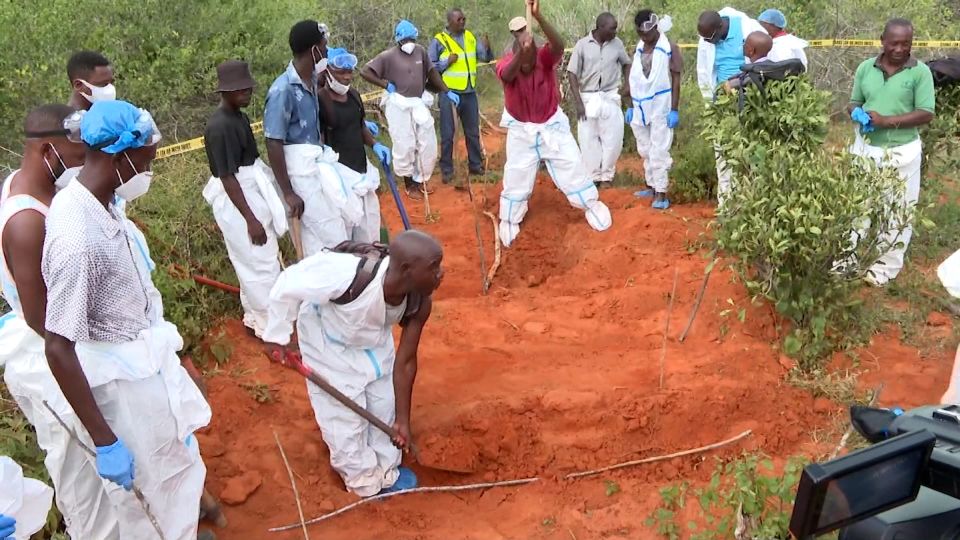
Over 400 bodies have been exhumed from mass graves, with investigators uncovering chilling details of followers starving themselves to death in a supposed quest to "meet God." As of late November 2024, this case faces financial hurdles that threaten to stall justice for victims and closure for families.
The Shakahola case broke wide open earlier this year when survivors fled the forest and informed authorities about the dire situation. The subsequent investigation led to the recovery of 437 bodies, with hundreds of others reportedly missing.
Most of the victims succumbed to starvation, while others bore signs of violence. Many were women and children—evidence of deep-seated exploitation within Mackenzie’s "Good News International Church."
Forensic experts have been overwhelmed by the sheer scale of the tragedy, and ongoing operations indicate there may be more graves yet to be discovered.
Paul Mackenzie, a self-proclaimed pastor, allegedly brainwashed his followers into believing that earthly life was meaningless, urging them to starve themselves to "purify their souls." His controversial sermons, initially dismissed as fringe beliefs, have become the focus of scrutiny. Mackenzie is now facing multiple charges, including mass murder, radicalization, and abuse of human rights.
Survivors narrate harrowing tales of coercion, with some followers reportedly beaten if they refused to comply with the starvation orders.
Others claim they were promised divine rewards if they allowed their children to die of hunger.
While the scale of the Shakahola cult's crimes demands swift justice, the case has been hampered by logistical and financial constraints.
Prosecutors recently cited a lack of funds to proceed with key aspects of the investigation, such as transporting bodies for autopsies, DNA testing, and the maintenance of mass gravesites.
These financial challenges have slowed the judicial process, leaving families in limbo.
The cost of exhuming bodies, preserving evidence, and supporting the hundreds of survivors has stretched resources thin. Forensic experts also need advanced tools and manpower to identify victims—a process that could take years if not adequately funded.
The Kenyan government has faced criticism for its handling of the Shakahola case.
Despite setting up a task force to address religious extremism, many believe authorities should have acted earlier to prevent Mackenzie’s operations from escalating.
President William Ruto described the tragedy as "akin to terrorism," vowing that such exploitation would not be tolerated.
However, human rights organizations argue that the government’s response has been reactive rather than proactive.
As the case unfolds, citizens are demanding more stringent regulations on religious organizations to prevent future atrocities.
Amid the grim discoveries, survivors have come forward with heartbreaking testimonies.
Mary Atieno, a mother of two who escaped the forest, recounted her ordeal: "They told us our children would be angels in heaven if they died. I was starving, but my maternal instincts pushed me to run with my kids."
Another survivor, James Mwangi, shared how Mackenzie's teachings preyed on the vulnerable: "I joined because I wanted answers. Instead, I lost everything—my family, my faith, my life as I knew it."
The case has drawn international attention, with organizations such as the United Nations urging Kenya to conduct a thorough and transparent investigation.
Legal experts have highlighted the complexities of prosecuting Mackenzie and his accomplices, given the scale of the crimes and the need for robust evidence.
Kenyan courts are also grappling with unprecedented legal questions, such as the culpability of followers who may have coerced others under Mackenzie’s influence.
The Shakahola case underscores the need for systemic reforms in Kenya's approach to religious extremism and cults. Experts suggest the following measures:
As Kenya grapples with the magnitude of the Shakahola tragedy, it serves as a sobering reminder of the vulnerabilities exploited by charismatic yet dangerous leaders.
While financial challenges have slowed the pursuit of justice, the resolve of survivors, activists, and citizens alike remains unshaken. The hope is that out of this darkness, Kenya will emerge stronger, with lessons learned and safeguards in place to protect its people from future atrocities.
RECOMMENDED FOR YOU

20 mins ago
122 min read

20 mins ago
122 min read

20 mins ago
102 min read

20 mins ago
102 min read
20 mins ago
122 min read

20 mins ago
102 min read

20 mins ago
122 min read

20 mins ago
122 min read

20 mins ago
122 min read
20 mins ago
72 min read
Related Posts
See All >
20 mins ago
122 min read
20 mins ago
122 min read
20 mins ago
102 min read
20 mins ago
102 min read
20 mins ago
122 min read
20 mins ago
102 min read
20 mins ago
122 min read
20 mins ago
122 min read
20 mins ago
122 min read
20 mins ago
72 min read

20 mins ago
122 min read

20 mins ago
122 min read

20 mins ago
122 min read
20 mins ago
82 min read

20 mins ago
102 min read

20 mins ago
102 min read

20 mins ago
72 min read
20 mins ago
82 min read
20 mins ago
122 min read

20 mins ago
152 min read

20 mins ago
122 min read

20 mins ago
72 min read

20 mins ago
72 min read

20 mins ago
122 min read

20 mins ago
122 min read
20 mins ago
122 min read

20 mins ago
122 min read
20 mins ago
82 min read
20 mins ago
122 min read

20 mins ago
122 min read

20 mins ago
102 min read

20 mins ago
102 min read